Aluminium windows in Epsom: what whole jobs cost, and the streets where you need permission first
Much of Epsom and Ewell is Victorian, Edwardian and 1930s housing, and most of it can have aluminium windows and doors fitted without a planning application. The figures on the right are for complete jobs on local house types, not prices per window.
Jobs like these typically cost
- Aluminium French doors, post-war house, Leatherhead£3,550 to £6,050
- Three-pane aluminium bifold, 1930s semi, Stoneleigh£6,250 to £10,350
- Every window in aluminium, 1930s semi, West Ewell£14,150 to £23,750
- Whole-house slimline aluminium, 1930s detached, Ashtead£15,350 to £28,150
Each figure is a whole illustrative job, supplied and fitted, including VAT. See all eight examples, including the same house in uPVC and the same sashes in timber.
Check one thing before you choose a frame
Epsom and Ewell Borough Council has 21 conservation areas. In a few of them, including Stamford Green, Ewell Village and Ewell Downs Road, an Article 4 direction means that replacing the windows or doors at the front of a family house needs planning permission, and the council's guidance says uPVC and aluminium are generally out of character there.
Outside those streets, a house with no listing can usually change its windows to aluminium or uPVC under permitted development, as long as the new frames are of a similar appearance to the house. A 1930s semi in Stoneleigh or a 1950s house in Langley Vale is in that position. A Georgian house on Church Street is not.
- Is the house listed? Then timber, repair or secondary glazing, with listed building consent.
- Is it in a conservation area with an Article 4 direction? Then the front windows need permission, and timber is the safe answer.
- Is it a flat? Flats have no householder permitted development rights, and the lease usually needs the freeholder's consent.
- None of these? Choose on looks, cost and upkeep.
What suits the main Epsom house types
1930s semis in Ewell, West Ewell and Stoneleigh
The commonest house in the borough. Most have a canted bay, casement windows and a back room that has often been extended. Aluminium flush casements keep the frames slim on the bay; uPVC flush casements come in about a fifth lower across a whole house. The back wall is where a bifold or sliding door usually goes.
Victorian and Edwardian houses near the town centre
The streets laid out after the common fields were enclosed in 1869, such as Burgh Heath Road, College Road and Worple Road, and the terraces built over Epsom Court from the 1890s, have sash windows and some bays. Here the choice is uPVC sash in a heritage finish, or timber where the street is protected.
Large detached houses in Ashtead, Woodcote and Headley
Bigger houses with wide openings, where aluminium pays back in slim frames, colour and very little maintenance. Steel-look aluminium suits Arts and Crafts and inter-war houses that had metal windows to begin with.
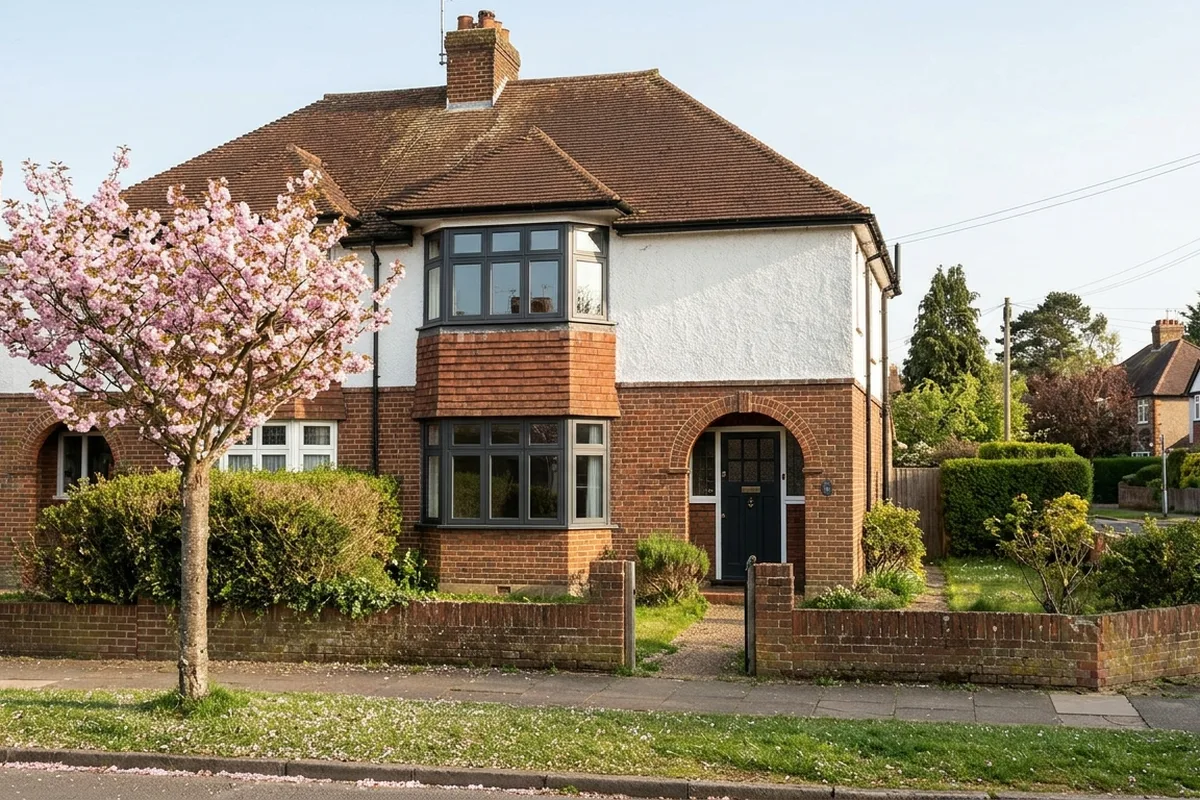
Why this site leads with aluminium
Aluminium frames are narrower than uPVC for the same strength, so a 1930s bay or a wide garden opening keeps more glass. The colour is baked on, so a grey or black frame does not need painting. The trade is cost: on the West Ewell semi in our examples, the aluminium version of the same job is about a quarter dearer than uPVC.
We also show uPVC, because on many Epsom houses it is the sensible choice, and timber, because some streets require it.
Places covered
- EwellVillage conservation area and 1930s estates
- StoneleighSemis built from 1933 around the Broadway
- Epsom DownsChalk Lane, The Ridings and Langley Vale
- AshteadInter-war detached houses, Mole Valley council
- LeatherheadEdwardian streets and an Article 4 town centre
- HeadleyDetached houses on the North Downs
Ask for a survey
Tell us about the house and how many windows or doors you have in mind. A FENSA-registered installer will call back to arrange a survey.